


Why Shelf-Life Testing Matters for Ready-to-Eat and Packaged Foods

Shelf-life testing is a fundamental pillar of food safety, quality assurance, and regulatory compliance for ready-to-eat (RTE) and packaged food products. As modern consumers increasingly rely on convenient, minimally processed, and extended-shelf-life foods, manufacturers face growing responsibility to ensure that products remain safe, stable, and acceptable throughout their declared life.
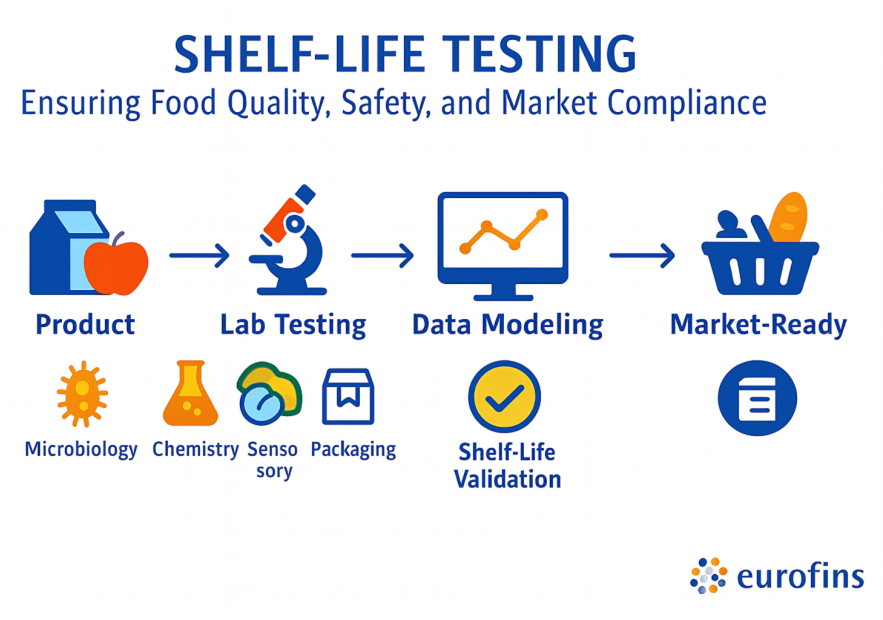
Ready-to-eat and packaged foods are often consumed without further cooking and may be exposed to complex storage, transport, and retail conditions. These factors make them particularly vulnerable to microbiological growth, chemical degradation, physical instability, and sensory deterioration over time.
Eurofins supports food manufacturers, brand owners, and exporters with scientifically validated shelf-life testing services designed to evaluate real-world product behavior. Through advanced laboratory analysis, storage simulation, and expert interpretation, Eurofins helps businesses establish defensible shelf-life claims while protecting consumer health and brand reputation.
What Is Shelf-Life Testing?
Shelf-life testing is the systematic evaluation of a food product over time to determine the period during which it remains fit for consumption and compliant with regulatory and quality expectations.
A validated shelf-life ensures that the product:
- Remains safe for consumption with no unacceptable microbiological risk
- Maintains nutritional integrity, including stability of declared nutrients
- Preserves sensory quality, such as taste, aroma, texture, and appearance
- Complies with label claims, regulatory limits, and customer specifications
Testing is conducted under defined and controlled storage conditions that reflect actual distribution, retail, and consumer handling environments.
Why Shelf-Life Testing Is Critical for RTE & Packaged Foods
Shelf-life testing is not merely a regulatory formality it is a strategic tool that supports food safety, market access, and business sustainability.
|
Key Aspect |
Why It Matters |
|
Consumer safety |
Prevents foodborne illness, spoilage, and public health risks |
|
Regulatory compliance |
Provides scientific justification for use-by and best-before dates |
|
Brand protection |
Reduces recalls, complaints, and reputation damage |
|
Market access |
Meets export, retailer, and private-label requirements |
|
Cost optimization |
Avoids unnecessarily short or overly conservative shelf lives |
Products Commonly Requiring Shelf-Life Validation
Shelf-life studies are essential across a wide range of food categories, including:
- Ready-to-eat meals, snacks, and chilled foods
- Bakery, confectionery, and cereal-based products
- Dairy products and plant-based dairy alternatives
- Sauces, spreads, condiments, and dressings
- Beverages, juices, and functional drinks
- Infant foods and medical nutrition products
- Vacuum-packed, retort, and modified-atmosphere foods
Key Factors Affecting Shelf Life
Shelf life is influenced by multiple interacting factors, which must be evaluated holistically.
1. Microbiological Stability
The growth of spoilage organisms and pathogens such as Listeria monocytogenes, Salmonella, yeasts, and molds is a primary safety concern—particularly in chilled and RTE foods.
2. Chemical and Physical Changes
- Lipid oxidation leading to rancidity
- Protein degradation affecting texture and flavor
- Moisture migration causing sogginess or dryness
- Color, clarity, and structural changes over time
3. Packaging Performance
- Oxygen and moisture barrier efficiency
- Seal integrity and headspace composition
- Migration of packaging components into food
4. Storage and Distribution Conditions
- Temperature abuse during transport or retail
- Light exposure affecting sensitive ingredients
- Humidity fluctuations impacting stability
Shelf-Life Testing Approaches Used by Eurofins
Eurofins applies fit-for-purpose testing strategies tailored to product type, risk profile, and market requirements.
- Real-Time Shelf-Life Studies
Products are stored under intended conditions and tested at defined intervals. These studies provide the most robust evidence for regulatory submissions and label claims.
- Accelerated Shelf-Life Studies
Elevated temperature and stress conditions are used to predict long-term stability in shorter timeframes, supporting faster product development and reformulation decisions.
- Challenge Testing
Specific microorganisms are intentionally introduced to evaluate product safety under worst-case scenarios. This approach is particularly critical for chilled RTE foods and high-risk categories.
Eurofins Shelf-Life Testing Parameters
|
Testing Category |
Purpose |
|
Microbiological analysis |
Detection of spoilage organisms and pathogens |
|
Chemical stability |
Monitoring oxidation, preservatives, pH, and degradation |
|
Physical analysis |
Evaluation of texture, moisture, and phase separation |
|
Sensory evaluation |
Assessment of taste, aroma, and appearance over time |
|
Packaging interaction |
Seal integrity, migration testing, headspace gases |
Regulatory and Labeling Importance
Regulatory Framework and Compliance Standards
|
Authority |
Regulation |
Requirement |
|
FSSAI |
Food Safety and Standards (Imports) Regulation, 2017 |
No food article shall be cleared from customs unless it has a valid shelf life of at least 60% or a minimum of three months at the time of import. |
|
FDA |
21 CFR Part 101 (Labeling) |
Food labeling must include expiration dates or "best before" dates to inform consumers about safety and quality. |
|
EU |
Regulation (EU) No 1169/2011 |
Distinguishes between "use by" dates for highly perishable foods and "best before" dates for other products, requiring clear labeling. |
Raw Milk
|
Aspect |
Details |
|
Shelf Life |
No specific standard shelf life mentioned for raw milk. |
|
Storage Guidelines |
- Raw milk should be cooled to 5°C or lower immediately after collection. - Milk delivered to dairy plants must arrive within 4 hours and be cooled to 5°C or lower. - Bulk chilling centers must maintain raw milk at 5°C or lower. |
|
References |
- FSSAI Guidance Note on Milk Products - FSSAI RCD Milk Processing Unit - FSSAI Guidance Document on Milk |
Cereal Products (Flour, Rice, Pulses)
|
Aspect |
Details |
|
Shelf Life |
Set at 3 months. |
|
Labeling |
- Products with a shelf life of more than 3 months must use the "DD/MM/YY" format for the "Best Before" date. - The date, month, and year of manufacture and packaging must be specified for products with a "Best Before Date" of more than three months. - "Best Before" must be mentioned in capital letters, e.g., "BEST BEFORE ___ MONTHS AND YEAR". |
|
References |
Meat and Meat Products
|
Aspect |
Details |
|
Shelf Life |
- Fresh meat: Consume within 2 to 4 days under chilling conditions (0°C to 7°C). - Frozen meat: Recommended consumption within 12 months (stored at -18°C or lower). |
|
References |
Fruits and Vegetables
|
Aspect |
Details |
|
Shelf Life |
Perishables should be stored between 4°C and 6°C. |
|
Labeling |
- Packaged products must display "Best Before" or "Use By" dates. - Imported goods must have at least 60% of their shelf life remaining or a minimum of three months at the time of import. |
|
References |
- FSSAI Guidance Document on Clean Fresh Fruit and Vegetables |
Packaged Foods
|
Aspect |
Details |
|
Shelf Life |
- Products with a shelf life of up to 3 months must use the DD/MM/YY format. - Products with a shelf life exceeding 3 months can use the month and year format. - Foods with a shelf life of less than 7 days may not need to mention the date of manufacture. |
|
References |
- Indian Express: FSSAI Amends Labeling Rules - IndiaFilings: FSSAI License Regulations on Food Packaging |
Risks of Inadequate Shelf-Life Validation
Insufficient or poorly designed shelf-life studies can result in:
- Premature spoilage and customer complaints
- Undetected pathogen growth and safety incidents
- Product recalls and market withdrawals
- Export rejections and supply chain disruption
- Legal, financial, and reputational damage
Integration with Food Safety and Quality Systems
Shelf-life testing strengthens and complements existing food safety systems.
|
System |
Role |
|
HACCP |
Validates critical control points and product safety limits |
|
GMP |
Confirms effectiveness of handling and storage practices |
|
Product development |
Optimizes formulation, processing, and packaging |
|
Supply chain control |
Supports cold-chain and distribution validation |
Case Example: Extending Shelf Life Without Compromising Safety
A chilled RTE food manufacturer experienced frequent spoilage complaints well before the declared expiry date. Eurofins conducted microbiological trend analysis, packaging gas optimization, and storage simulation studies. By adjusting formulation pH and optimizing the packaging atmosphere, the validated shelf life was extended by 25% while maintaining full microbiological safety and regulatory compliance.
Why Choose Eurofins for Shelf-Life Testing
- Global network of ISO/IEC 17025-accredited laboratories
- Expertise across RTE, dairy, bakery, beverages, and infant foods
- Integrated microbiological, chemical, sensory, and packaging testing
- Regulatory-ready documentation and expert scientific interpretation
- Support for domestic and international export markets
Partner with Eurofins your trusted pathway to compliant, export-ready food
Enquire now: www.eurofins.in/food-testing/enquire-now/

